 Skip to content


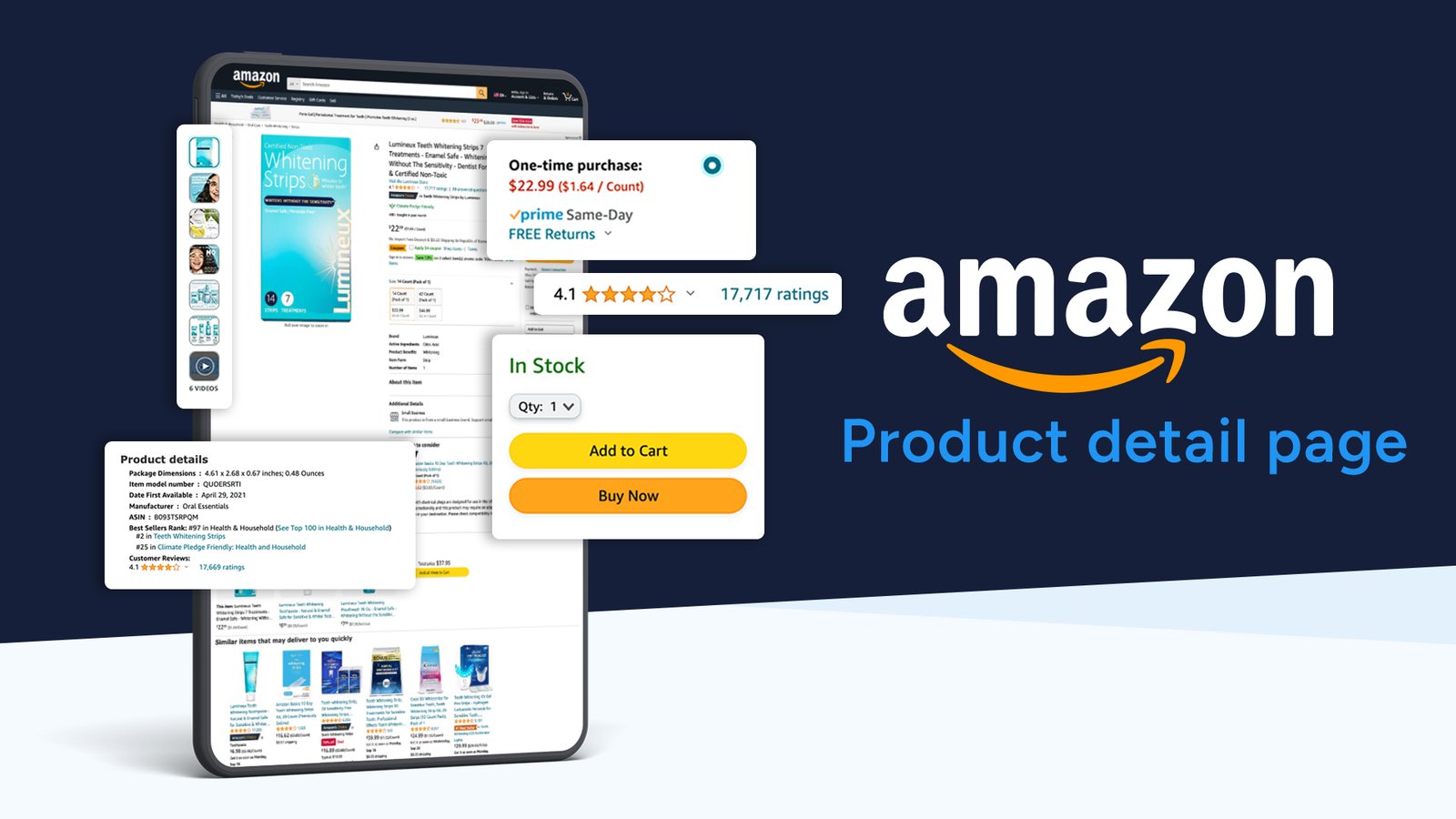
The top 1% of Amazon sellers aren’t successful because they’re lucky. They succeed because they treat every product page like a conversion machine. Their listings aren’t just “optimized” they’re engineered, analyzed, polished, and repeatedly refined until every element works together to turn visitors into buyers.
If your product page isn’t converting, it doesn’t matter how much traffic you drive, your ads will get expensive, your organic rank will drop, and your competitors will steal your customers. The good news? With the right approach, you can optimize your Amazon product page to perform at the same level as top 1% sellers.
This guide breaks down exactly how high-performing sellers optimize their listings, the key elements you must focus on, and the proven techniques that dramatically increase visibility, clicks, and conversions.
1. Perfect Your Product Title Like a Pro
Your product title is your first chance to convince buyers and Amazon’s algorithm that your product is exactly what they’re searching for.
Top sellers follow a simple formula:
Primary Keyword + Core Benefit + Key Feature + Variant (Size/Color/Pack)
For example:
“Organic Vitamin C Serum for Face – Anti-Aging, Brightening, 30ml – Hyaluronic Acid”
Why This Works
-
Matches high-intent keywords
-
Communicates value instantly
-
Improves click-through rate (CTR)
-
Helps Amazon index your listing correctly
Pro Tips of Top 1% Sellers
-
Always place your most important keyword at the very beginning
-
Avoid keyword stuffing, it confuses buyers and lowers conversions
-
Include differentiators that matter (material, pack size, variant, use case)
A strong title doesn’t just help you rank, it helps you win the click, which is the first step toward winning the sale.
2. Write Bullet Points That Inform, Persuade, and Convert
Your bullet points should feel like a conversation not a technical manual.
Top sellers use bullet points to answer the exact questions buyers have before clicking “Add to Cart.”
High-Converting Bullet Strategy
-
Start each bullet with a bold benefit
-
Follow with an explanation of how it helps
-
Address an objection the customer may have
-
Keep it scannable and clean
Example Structure
-
Long-Lasting Battery Life: Enjoy up to 10 hours of continuous use without charging, perfect for travel, work, or outdoor activities.
-
Comfort-Fit Design: Ergonomically shaped for all-day wear with zero discomfort.
Avoid These Common Mistakes
-
Writing long, dense paragraphs
-
Only listing features instead of benefits
-
Repeating the same information
The top 1% communicate confidence and clarity your bullets must do the same.
3. Create a Compelling, Persuasive Product Description
Most sellers ignore the product description, but top sellers use it as the final push that seals the sale.
What High-Performing Descriptions Include
-
A short story or relatable problem
-
How your product solves that problem
-
Emotional triggers (ease, comfort, convenience, safety)
-
Formatting (bold text, spacing, clear structure)
-
A strong call to action
Example Opening
“Tired of cables that break within weeks? Our reinforced charging cable is built to last, giving you a reliable and fast charge every time you need it.”
A great description transforms doubt into trust and curiosity into confidence.
4. Use Professional Images That Sell Automatically
Amazon is visual. Your images must tell a story even if the customer never reads a word.
What Top 1% Sellers Include in Their Image Stack
-
Clean white-background hero image
-
Lifestyle images showing real use
-
Infographic images explaining features
-
Size comparison images
-
Problem-solution image (before/after where applicable)
-
Packaging and in-the-box contents
-
Bonus or guarantee image
Why This Matters
-
Builds trust
-
Reduces returns
-
Increases conversions
-
Answers questions visually
Images are the strongest form of silent selling, make every photo work for you.
5. Optimize Your Backend Keywords Like the Experts
Backend keywords help Amazon understand your product. Most sellers either ignore them or fill them incorrectly.
Rules Top Sellers Follow
-
No commas
-
No repeating visible keywords
-
Add misspellings, synonyms, and alternate names
-
Include long-tail phrases
Example Backend Keyword Strategy
For a garlic press:
stainless steel crusher, garlic mincer, kitchen tool, herb press, vegetable chopper
Backend keywords improve indexing quietly but significantly.
6. Use A+ Content to Boost Conversion by 10–30%
Top performers always use A+ content (Enhanced Brand Content) because it:
-
Increases conversion rate
-
Improves customer experience
-
Reduces returns
-
Strengthens brand identity
Winning A+ Content Structure
-
Comparison chart (show your product vs others)
-
Benefit-driven banners
-
Lifestyle visuals
-
Detailed feature blocks
-
Brand story section
A+ content makes your listing look premium and trustworthy.
7. Track Metrics Like a Scientist
Top sellers treat optimization as a continuous process not a one-time task.
They track key metrics weekly to see how changes affect performance.
Key Metrics Top 1% Sellers Monitor
| Metric | Why It Matters | Target for Top Sellers |
|---|---|---|
| CTR | Measures how your title & images perform | 1.5%–5%+ |
| CVR | Measures how well the page converts | 15%–30% |
| Organic Rank | Determines visibility | Top 10 |
| Reviews Rating | Impacts trust & conversion | 4.3+ |
| Return Rate | Shows product quality | Under 5% |
8. Use Reviews and Social Proof to Drive Conversions
Nothing influences Amazon buyers more than trust signals.
Top sellers actively manage:
-
Review requests
-
Customer follow-ups
-
Auto responders
-
Product inserts
-
Customer service
Why Reviews Matter
-
Higher rating → higher conversion
-
More reviews = stronger social proof
-
Positive feedback improves organic ranking
How Experts Reduce Negative Reviews
-
Provide clear instructions
-
Use better packaging
-
Improve product clarity in images
-
Respond to complaints immediately
Small improvements in reviews lead to big improvements in sales.
Review Optimization Checklist
| Action | Impact | Importance |
|---|---|---|
| Early reviewer follow-up | Increases initial reviews | High |
| Product inserts | Boosts satisfaction | High |
| Clear instructions | Reduces confusion | Medium |
| Fast customer support | Prevents negative reviews | High |
| Post-purchase emails | Encourages feedback | Medium |
9. Differentiate Yourself Clearly
Top sellers are experts at answering one question:
“Why should the customer choose ME, not my competitor?”
Differentiation can be:
-
Better materials
-
Longer warranty
-
More accessories
-
Better packaging
-
More variations
-
Faster support
Even small differences can justify higher prices and better rankings.
10. Keep Testing and Refining Your Listing
The top 1% never stop optimizing. They test:
-
Titles
-
Images
-
Bullets
-
Price
-
A+ content
-
Product variations
Every improvement compounds over time.
Final Thoughts
Optimizing product pages like the top 1% Amazon sellers is not about tricks or shortcuts, it’s about understanding what buyers need, what Amazon rewards, and how to connect both through a perfectly crafted listing.
When done right, page optimization boosts:
-
Organic ranking
-
Conversion rates
-
Ad efficiency
-
Customer trust
-
Long-term sales growth
Your product page is your digital storefront. When you treat it like the pros do, the results follow and they often exceed expectations.
FAQs
1. How long does it take to see results after optimizing a listing?
Most sellers see improvements in 7–14 days, especially in conversion rate and organic ranking.
2. What is the most important part of an Amazon product page?
Your main image and title, because they determine your click-through rate.
3. Should I use A+ content on every listing?
Yes. A+ content increases conversions by 10–30% and makes your listing look more trustworthy and premium.
4. How many images should a product listing have?
Top performers use all 7 image slots, with a mix of hero, lifestyle, and infographic images.
5. Do keywords still matter in 2025?
Absolutely. Smart keyword usage helps Amazon understand your product and rank you correctly.
